BIM-enabled prefabrication is the practice of fabricating building components off-site — in a controlled shop environment — using dimensions and data derived directly from a coordinated BIM model. The result: assemblies that fit the first time, schedules that compress, and waste that disappears before it reaches the jobsite.
Prefabrication is not new. Contractors have been pre-assembling components off-site for decades. What is new is the reliability. For most of that history, prefabrication was a bet — you hoped the field dimensions matched what the shop built. Sometimes they did. Often enough they did not that the risk premium made prefab harder to justify.
BIM removes the bet. When the shop builds from the model and the field is laid out from the same model, the assembly fits. That change — from hoping to knowing — is what has turned prefabrication from a niche approach into one of the fastest-growing strategies in construction.
 Photo by Jhonny' Mages on Pexels
What Is Prefabrication in Construction?
Prefabrication is the process of manufacturing building components — structural panels, MEP assemblies, ductwork sections, pipe racks, modular units — in a factory or shop environment before transporting them to the construction site for installation.
It is distinct from modular construction, though the two are often grouped together. Prefabrication typically refers to individual components or assemblies (a duct rack, a framing panel, a bathroom pod). Modular construction refers to larger volumetric units — entire rooms or sections of a building assembled in the factory and stacked or connected on site.
Both benefit from BIM. Both depend on dimensional accuracy that traditional field measurement cannot consistently deliver.
Why Move Work Off the Jobsite?
The case for prefabrication comes down to environment.
A construction jobsite is a chaotic, weather-exposed, sequencing-constrained, multi-trade environment where conditions change daily and every crew is competing for the same space. A fabrication shop is climate-controlled, organized, staffed with trade-specific specialists, and free from the sequencing conflicts that slow field installation.
When work moves from the site to the shop:
- Speed increases. Modular projects run 20–50% faster than equivalent site-built projects. Shop fabrication runs parallel to site work — while structure is going up, MEP assemblies are being built in the shop.
- Quality improves. Controlled environment, dedicated workforce, QC at the point of fabrication rather than overhead on a scissor lift.
- Safety improves. Less work at height. Less congestion on the slab. Fewer trades in the same space.
- Waste decreases. Precise cutting and assembly from known dimensions generates 15–20% less material waste than field installation.
The Modular Building Institute reports the US modular construction market reached $20.3 billion in 2024 — roughly 5.1% of total construction — and is projected to reach $25.4 billion by 2029. The industry has voted. For prefab to work reliably at that scale, a coordinated BIM model is non-negotiable — read our BIM coordination guide to understand why.
BIM as the Digital Backbone of Prefabrication
BIM makes prefabrication reliable because it solves the fundamental problem: dimensional accuracy before anyone cuts material.
In a traditional workflow, prefabrication is constrained by when accurate dimensions are available. You cannot fabricate a duct rack until you know exactly how much ceiling space you have, where the structural members land, and how the other trades are routed. Getting that information traditionally required waiting for the structure to be built, then field-measuring, then fabricating — which pushes fabrication so late it loses most of the schedule benefit.
BIM reverses this sequence. With a coordinated model:
- Duct routing is resolved before structural steel is ordered
- Clearances between structure, fire protection, and MEP are confirmed digitally
- Shop drawings are generated directly from the model geometry
- Fabrication begins while the structure is still being erected
This is the phrase United-BIM uses well: BIM is the "digital backbone" that bridges design, fabrication, and assembly. Without it, the three phases are disconnected. With it, they are one continuous workflow.
Design Accuracy: Getting Dimensions Right Before Anyone Cuts Metal
The coordinated BIM model is a dimensional source of truth. When every structural member, MEP route, and architectural finish is resolved in three dimensions before fabrication begins, the shop can cut with confidence.
Parametric modeling is the specific BIM capability that makes this work. Every dimension in the model is defined by relationships: a duct is routed at a specific elevation relative to the structural bottom chord, maintaining specified clearances from adjacent systems. When the structural engineer adjusts a beam depth by 2 inches, the duct routing updates automatically, and the shop drawing reflects the new dimension.
That automatic propagation eliminates the version control nightmares that plague traditional document coordination. The shop builds from the current model, not from a drawing that may have been superseded three revisions ago.
Clash detection is the quality gate that confirms the dimensions are right. Before any shop drawing is issued for fabrication, the coordinated model is checked for conflicts between systems. Clashes are resolved. The model is clean. Then — and only then — fabrication begins.
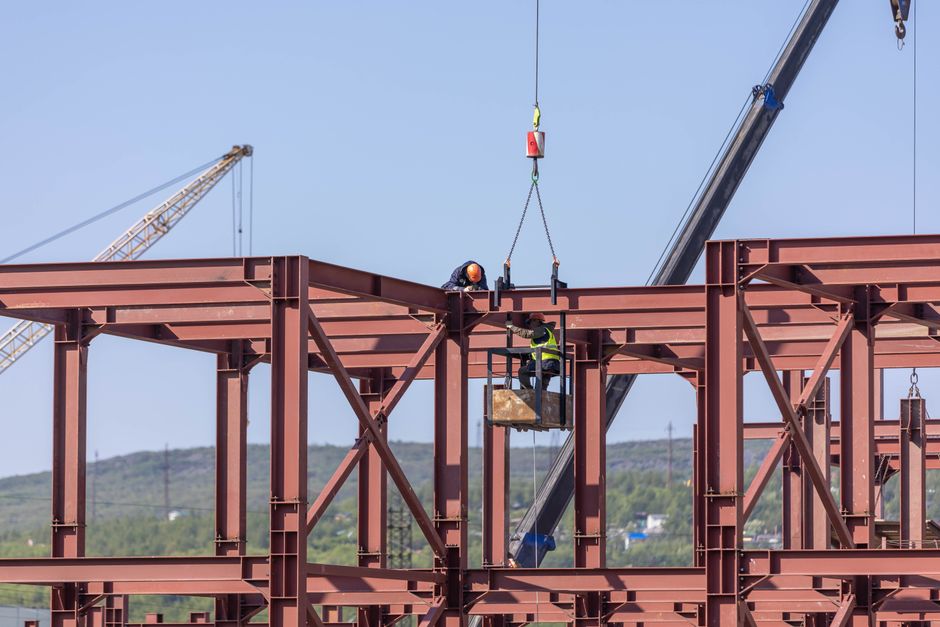 Photo by Sergei Starostin on Pexels
4D BIM: Scheduling Fabrication in Parallel
One of prefabrication's greatest advantages — running shop work in parallel with site construction — requires careful sequencing management. 4D BIM (the construction schedule layered onto the 3D model) is the tool that makes this coordination possible.
4D BIM lets the project team:
- Visualize when each assembly needs to be on site and work backward to determine when fabrication must begin
- Identify sequencing conflicts before they become delivery problems — if two large assemblies are scheduled for the same crane window on the same day, 4D coordination catches it in the model
- Coordinate delivery logistics so that assemblies arrive in the order they will be installed, not in whatever order the fabricator can ship them
- Compress the schedule by identifying opportunities to run fabrication earlier than the traditional model would allow
Without 4D coordination, prefabrication's schedule benefits are theoretical. With it, they are engineered.
Types of Prefabrication That BIM Enables
Structural Framing Panels — Light gauge or heavy timber framing panels fabricated flat in the shop and tilted or lifted into position on site. The BIM model defines every stud, header, and opening. CNC cutting equipment produces panels to model dimensions. Field crews become assembly crews rather than framing crews.
MEP Racks — Multi-trade support structures that combine duct, pipe, conduit, and cable tray on a single fabricated frame. MEP racks are assembled in the shop, transported to site, and lifted into the ceiling in one operation. A coordinated model is mandatory — the rack is designed to fit a specific ceiling space within specific clearances. Dimension errors mean a rack that does not fit.
Pipe Spools — Prefabricated pipe sections with factory-applied fittings, insulation, and in some cases pre-tested pressure integrity. Pipe spools eliminate field welding and threading in tight spaces. BIM defines the exact geometry of each spool, and point-to-point dimensions are extracted directly from the model for shop production.
Bathroom Pods — Fully finished bathroom units assembled in a factory and craned into position in the structural shell. Pods require the highest BIM LOD because every connection — plumbing, electrical, drain, vent — must be precisely located in both the pod and the receiving structure.
The Numbers: What Prefabrication Actually Saves
These are not aspirational figures. They come from project data and industry research:
- 20–50% faster than equivalent site-built construction
- Up to 20% cost savings on construction cost
- 15–20% reduction in material waste
- 30–40% reduction in MEP installation labor on projects with BIM-coordinated MEP rack programs
- Significant reduction in field injuries from reduced overhead work and slab congestion
The cost savings are not evenly distributed. The biggest savings come from labor — prefabrication moves trade labor from the field (where productivity is constrained by access, congestion, and conditions) to the shop (where a specialized crew does focused work in an optimized environment).
Quality Control: Better Where It Is Built
Field QC on installed MEP systems means inspecting work done overhead, in congested spaces, under time pressure. An inspector finding a problem at that stage means stopping a crew, pulling an assembly, and reinstalling it in the same difficult conditions.
Shop QC on prefabricated assemblies means inspection in a well-lit, ground-level environment before anything is shipped. Problems found in the shop are corrected with a fraction of the labor and zero schedule impact on the site.
For MEP assemblies, shop QC can include:
- Pressure testing of pipe spools before delivery
- Continuity testing of electrical assemblies
- Dimensional verification of hanger attachment points against model coordinates
- Visual inspection of welding, threading, and insulation
An assembly that passes shop QC and is installed from a Trimble-accurate layout is, functionally, a verified system.
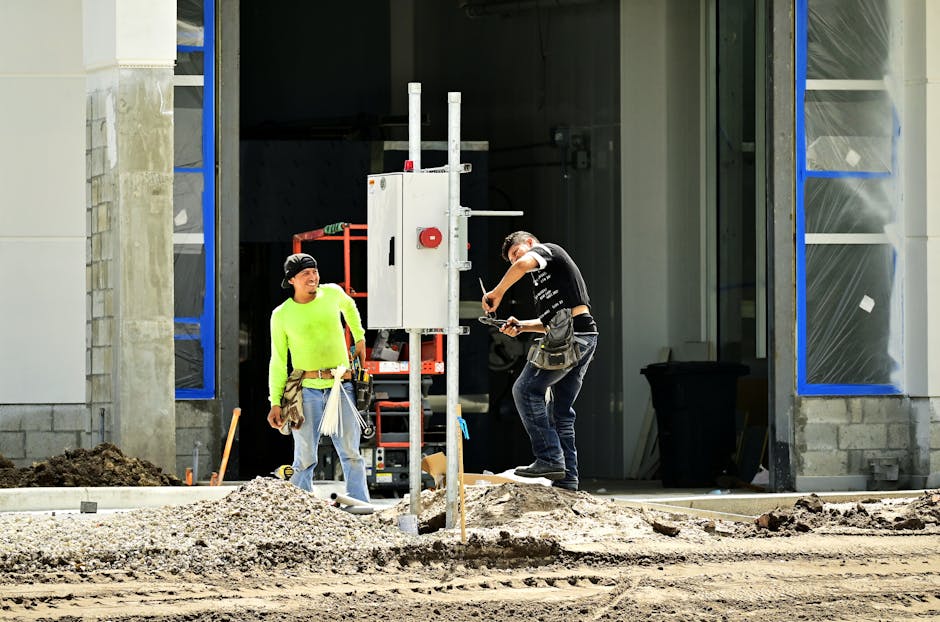 Photo by Nelson Axigoth on Pexels
The Risk Side: Dimensional Tolerance
Prefabrication's biggest vulnerability is also its biggest dependency on BIM: dimensional tolerance.
A prefabricated assembly is built to fixed dimensions. If the structure that receives it deviates from the model by more than the assembly's tolerance allows, the assembly does not fit. In the field, this creates an emergency: the assembly is on the crane, the crew is waiting, and the dimension is wrong.
The risk mitigation is verification — confirming that critical structural dimensions match the model before fabrication is released.
Point cloud scanning is the thorough approach: a laser scan of the as-built structure is registered to the model coordinate system, and deviations are identified before shop drawings are issued. Anything outside tolerance is flagged for resolution before the fabricator cuts material.
Trimble field verification is the targeted approach: the robotic total station shoots critical control points on the as-built structure and compares them to model coordinates. For projects with tight tolerances on a limited number of critical interfaces, this is faster than a full scan and sufficient.
Either way, the principle is the same: close the loop between the model and the field before fabrication, not after. Our Trimble field layout guide covers exactly how to do that verification step on the slab. The Associated General Contractors (AGC) also publishes prefabrication guidance for contractors adopting off-site workflows.
Frequently Asked Questions About BIM and Prefabrication
What types of construction benefit most from BIM-enabled prefabrication? Healthcare, data centers, multifamily residential, and complex commercial interiors benefit most. Any project with tight schedules, repetitive unit types, or complex MEP density is a strong candidate. Simple, low-repetition projects with loose tolerances see less return.
Does prefabrication require a fully coordinated BIM model? For MEP rack and structural panel prefabrication: yes. Shop drawings must reflect as-coordinated, not as-designed dimensions. Issuing pre-coordination shop drawings for fabrication is a common and expensive mistake.
How early does BIM coordination need to start for prefabrication to work? Coordination needs to be substantially complete before structural steel is ordered — roughly schematic to early design development for MEP rack programs. The schedule benefit of prefabrication depends entirely on coordination finishing before field milestones lock structural dimensions.
What is the biggest risk in a BIM-enabled prefabrication program? Dimensional deviation between the model and the as-built structure. Structural tolerances that are acceptable for site-built installation can exceed the tolerance of a prefabricated assembly. Verification — scan or Trimble field check — before releasing fabrication is essential risk management.
Can subcontractors without in-house BIM capability participate in prefabrication? Yes, with the right BIM partner. BIM outsourcing services allow subcontractors to provide scope information and receive coordinated shop drawings without building an in-house modeling team. The BIM coordination and shop drawing production happen externally; the fabrication and installation remain with the sub.
Build It in the Shop. Install It in the Field. Get It Right Every Time.
BIMFront delivers BIM-enabled prefabrication support end to end: MEP coordination, structural framing shop drawings, point cloud verification, and Trimble field layout to make sure the structure is ready to receive what the shop built.
Talk to the BIMFront team about building a prefabrication workflow into your next project.
